
Emily J. Miller
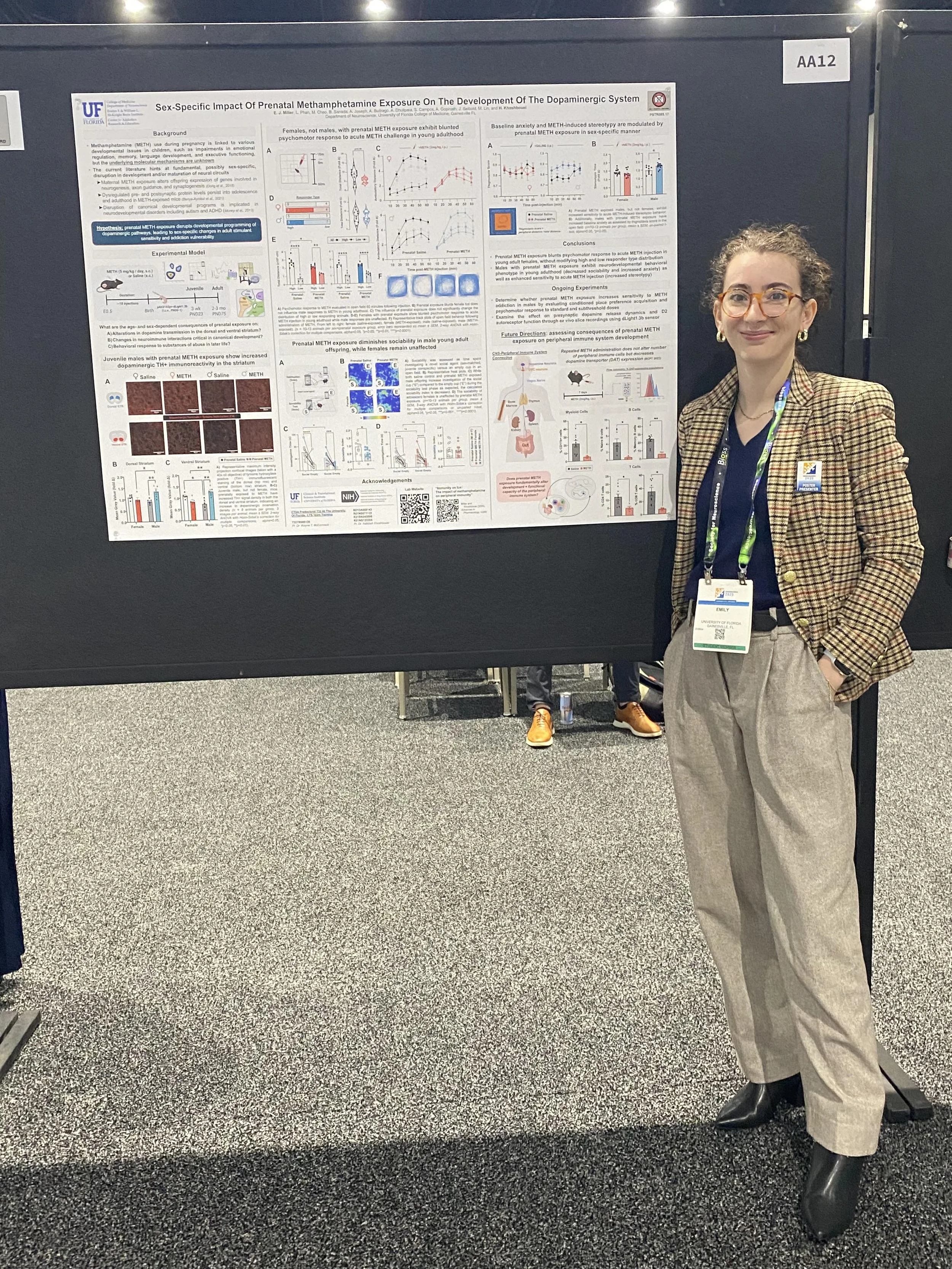
I first joined the lab in Spring 2022 as an undergraduate research volunteer. My primary work focused on exploring how states of abnormal dopamine transmission affect peripheral immune responses and neuroimmune interactions in the brain. Utilizing murine models of non-contingent, systemic methamphetamine (METH) administration as well as dopamine transporter knockout (DAT KO), we investigated the immunological role of DAT, a master regulator of dopaminergic tone. I had the opportunity to present this work at a number of regional and national conferences and it has led to multiple co-authorships. During this time, I also directed a team of fellow undergrads conducting histological experiments characterizing CNS neuroimmune interactions in DAT KO mice, focusing on engagement between microglia and tyrosine hydroxylase (TH)-positive dopamine neurons and further analyzing glial morphology along the mesolimbic and nigrostriatal pathways. During this time, I became fascinated with the interface between the dopamine and immune systems, which are critically interconnected throughout development, wondering how prenatal exposure to psychostimulants may influence the communication between these systems in juveniles and adolescents. I decided to continue my PhD work in Dr. Khoshbouei’s lab, starting in the Fall of 2023.
My PhD research now focuses on the sex-specific molecular and circuit-level consequences of prenatal methamphetamine exposure on the developing dopaminergic system. This work addresses a growing public health issue, as methamphetamine use during pregnancy is associated with long-term neurobehavioral and cognitive impairments. By employing a variety of behavioral, histological, biochemical, and electrophysiological techniques, my work focuses on elucidating the age- and sex-specific consequences of prenatal METH exposure. We investigate the rewiring of dopaminergic circuitry and transmission, effects on neuroimmune interactions, and how molecular perturbations correspond to anxious and addictive behaviors through the animal’s lifetime. By clarifying the molecular and circuit‑level disruptions caused by developmental METH exposure, this research can help identify critical windows of vulnerability and potential early‑intervention targets. Since dopaminergic system dysfunction is central to ADHD, substance use disorder, and aspects of autism related to social motivation and repetitive behaviors, insights from this project may be generalizable to broader pediatric and adolescent neurodivergent populations.
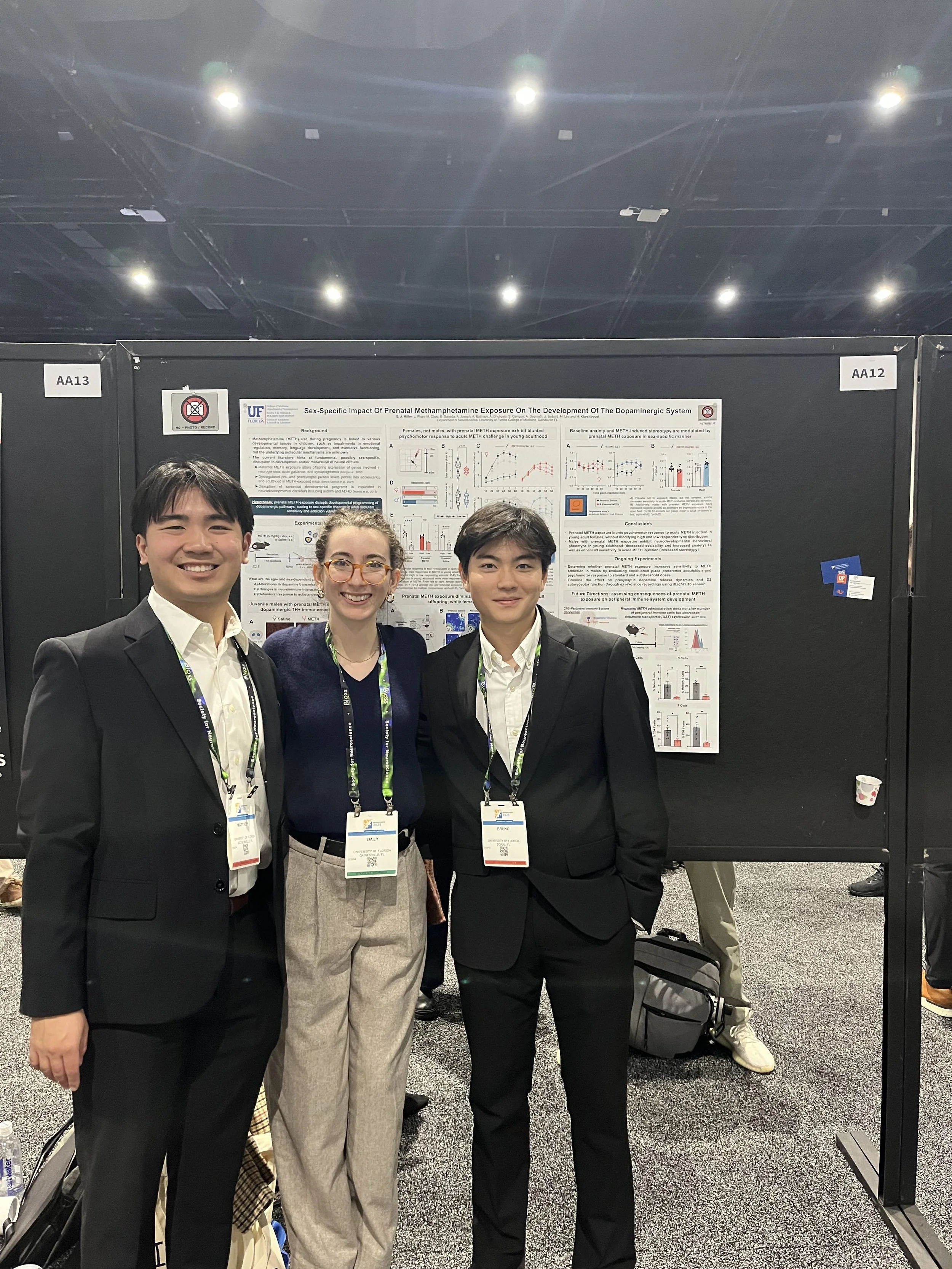
Beyond my dedication to uncovering the poorly understood mechanisms underlying neurobehavioral consequences of prenatal methamphetamine exposure, I care deeply about mentoring the next generation of scientists. Personally, I understand the profound impact of good mentorship, having pursued a career in science as the first in my family to pursue a PhD, without substantial financial support, and as a woman in a historically male‑dominated field. Supportive female mentors were critical to my own success and played a central role in building my confidence and scientific identity. I bring that experience directly into my mentoring philosophy. From my time as a senior undergraduate working to communicate my technical skills with incoming research volunteers, to my current role as the primary mentor to six undergraduate students, I work closely with my mentees to foster their growth into confident, independent researchers. I encourage them to think critically about existing literature, to translate questions into testable hypotheses, and to design and interpret experiments that rigorously address those questions. Helping others develop the technical and conceptual skills they need to succeed in research is not only rewarding but also central to my vision of a long-term career in academia.
emily’s exposure experts students:
Ana
Anvitha (USP 2026-27)
Avery
Asher (ESP 2025)
Bruno (ESP 2025)
Matthew (USP 2025-26)
Mahak (USP 2025-26)
Tim (alumni)